Are PSLE Past Year Papers Still Useful for the 2026 Exam?
2026 is the first PSLE cohort sitting under the revised Maths format. Parents who have spent months building a revision plan around past year papers are now asking a reasonable question: do those papers still hold?
The answer is yes. PSLE past year papers remain a useful preparation tool. But the format has shifted in ways that matter for how those papers should be used, and treating pre-2024 papers as direct exam simulations without adjustment will skew your child’s preparation.
Here is what has changed, what has not, and how to get the most out of the papers you already have.
What Has Actually Changed for PSLE Maths in 2026
The structural change is specific. Paper 1 and Paper 2 now carry equal weightage: 50 marks each. Previously, Paper 1 was worth 45 marks. Paper 1 Booklet B has also been revised: the one-mark short-answer questions are gone, replaced with more MCQs.
The practical consequence is easy to miss. Past papers from 2023 and earlier underweight Paper 1 practice. A child who defaults to Paper 2 problem sums because older papers placed the emphasis there will arrive at the exam with a preparation gap on the side that now counts just as much.
What has not changed: the core concepts, the high-frequency topics, and the multi-step problem-solving logic that PSLE Maths has always tested. Fractions, Ratio, Percentage, and Area and Perimeter appear across every year of the paper. The way questions are constructed, the decision points built into each problem sum, the reasoning required to work through them: these transfer fully.
For a fuller picture of this year’s format changes, the detail on how Paper 1 and Paper 2 now work is worth reading before building a revision plan.
Why Most Students Use Past Year Papers the Wrong Way
The pattern repeats every year. Child sits the paper. Parent marks it. Score goes in a notebook. Next paper begins.
The score is not the output. The score tells you where your child stands. The errors tell you why they are standing there.
A child who works through 10 PSLE exam papers without examining what went wrong is not building readiness. They are practising mistakes at speed. Past year papers are a measurement tool, not a method. They reveal gaps. They do not close them.
What Past Year Papers Are Actually Good For
Past year papers do four specific jobs well. The mistake is treating them as a fifth: a method for building the skills they are actually designed to measure.
- Familiarity with how PSLE questions are structured: The way PSLE Maths questions are worded, the multi-step logic of Paper 2 problem sums, the decision points inside each question: these are consistent across years. Repeated exposure builds pattern recognition that topical drills alone do not produce.
- Identifying which topics appear most consistently: That pattern recognition extends to content, not just format. Past year papers make the high-frequency topics visible quickly: Fractions, Ratio, Percentage, and Area and Perimeter show up in almost every year. Use that to prioritise revision, not to second-guess the exam.
- Diagnosing where marks are actually being lost: Look across the last three papers your child has attempted. A child losing marks on the same topic repeatedly has a conceptual gap that needs reteaching. A child losing marks across many different topics has a different problem: inconsistent application under pressure. The response from home should be different in each case.
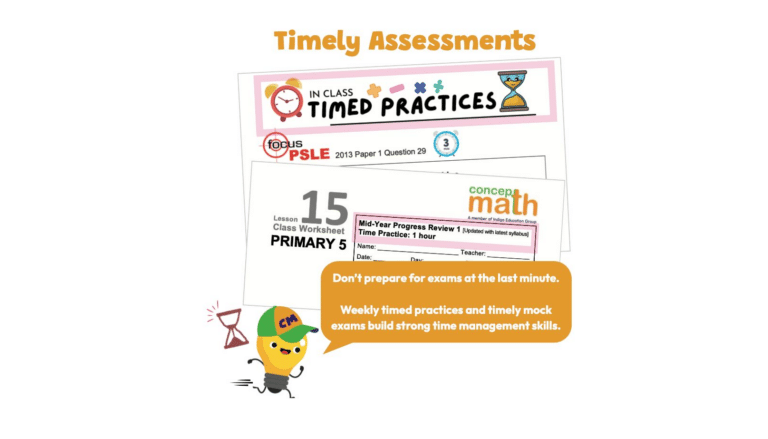
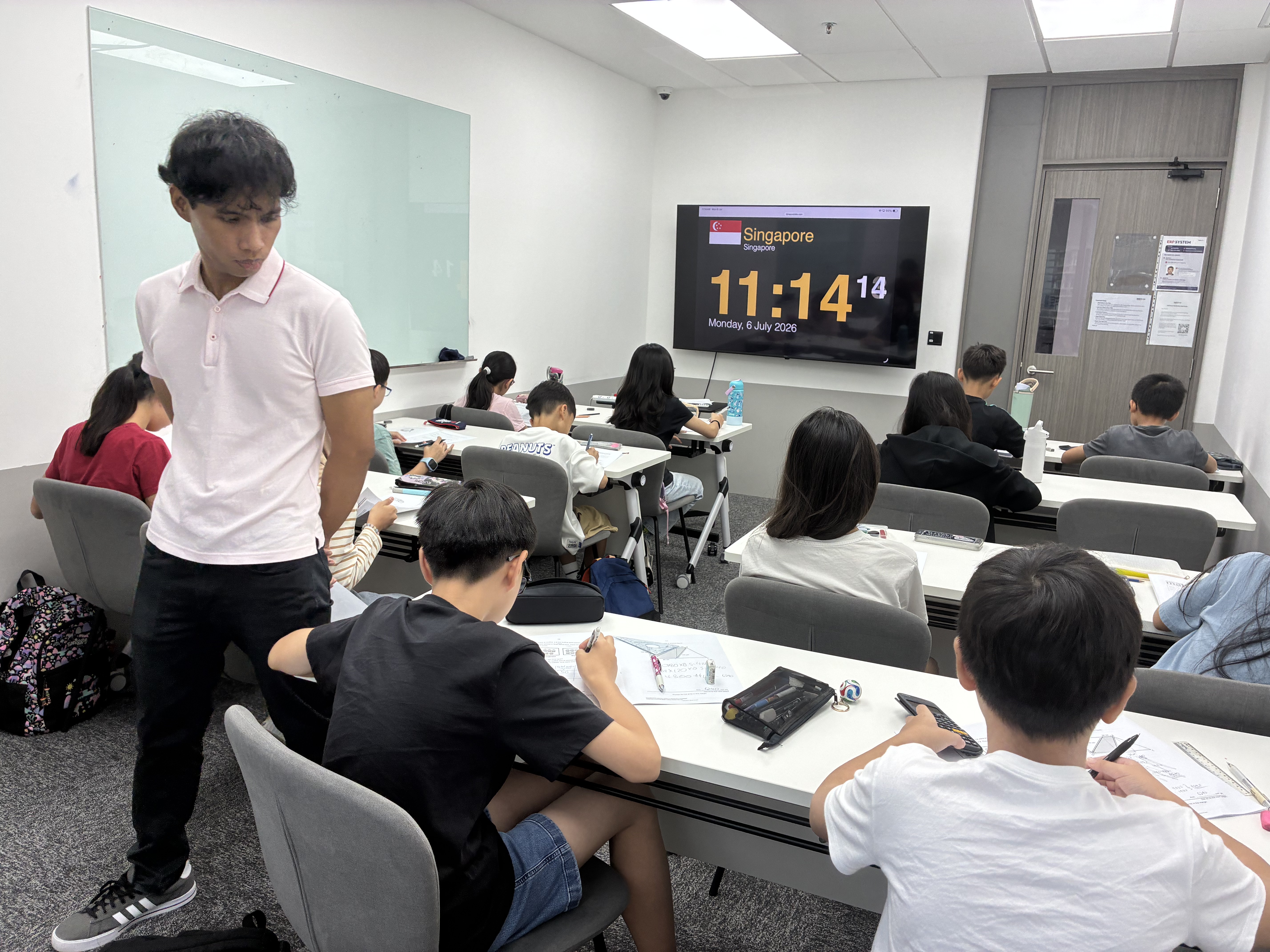
- Building the exam instincts that concept work alone cannot develop: The first three uses are diagnostic. This one is about performance. Timed practice under exam conditions builds composure and decision-making speed. Knowing when to skip a question, how to pace across both papers, how to approach an unfamiliar question format: these are skills that only come from doing papers, not from revision notes.
How to Use Past Year Papers Strategically for 2026 Maths
A few adjustments that matter specifically for this cohort:
- Prioritise the last three to five years of SEAB papers as the core set. These reflect question style and difficulty closest to 2026.
- Give Paper 1 equal preparation time. Older papers weighted Paper 2 more heavily. Adjust for that deliberately.
- Skip questions on Speed and any other topics no longer in the revised syllabus. Using them as full-paper simulations without filtering misrepresents the exam.
- Pair SEAB papers with top school exam papers from recent prelim cycles. Prelim papers are written to the current syllabus and difficulty level, and they expose your child to question styles the SEAB papers may not have covered.
- Use papers diagnostically on the first pass. Identify gap areas before moving to timed, full-paper simulations.
- Keep a simple error log: topic, error type (conceptual or careless), and whether it reappears on the next paper. Reading a marked paper properly takes more than scanning the wrong answers first.
Volume is not the target. A reviewed paper is worth more than a completed one.
When Past Year Papers Are Not Enough
Papers reveal the gap. They do not explain it or fix it.
A child who keeps losing marks on Ratio across three separate papers does not need a fourth paper. They need the concept retaught at the point where the understanding broke down. More paper practice, on top of an unresolved conceptual gap, does not yield different results.
This is where structured teaching earns its place. As a primary Maths tuition centre built around concept mastery, our PSLE maths tuition works through error patterns systematically: identifying the conceptual gap, reteaching the foundation, and confirming the correction before returning to timed practice.
If your child’s marks have plateaued despite regular paper practice, the errors in those papers are pointing to something specific. A trial lesson is the simplest place to start finding out what.