How to Read Your Child’s Math Test Paper for Revision
When the marked test paper comes home, most parents do roughly the same three things. They flip to the score. They scan the wrong answers. They tell the child to be less careless next time. The score gets remembered, the careless label gets repeated, and the math paper itself, which is the best revision tool a parent will see all term, goes unread.
While this is the most common response to a graded paper, it is also the most costly. A test paper carries far more information than a number on the front. Every mark lost is telling you something about where your child’s understanding breaks down, which topic is shaky, which kind of question they cannot answer, and which mistakes are careless. The paper is a map. What follows is how to read it.
The First Thing to Look At (That Isn't the Score)
Start with the split between Paper 1 and Paper 2 losses. The shape of that split tells you something different in each case.
Heavy Paper 1 losses may point to speed and accuracy issues. A child who is spending too long on questions that should be quick arrives at Paper 2 with less time and less mental energy than the paper demands. The fix is not more Paper 2 practice, but the daily speed work that makes answering Paper 1 less time-consuming.
Heavy Paper 2 losses may indicate gaps in concepts or methods. The child can handle the steps one by one, but cannot link them together across a long question. The fix here is in the concepts, not in the calculations.
Next, look at which topics show up in the questions that were wrong. Marks lost on one topic indicate a clear gap in that topic. Marks lost across many topics, with no single one standing out, point to a thinking-process issue that runs through the whole syllabus.
Finally, look at where in each long question the marks were lost. Losing marks at Step 1 means the child did not know how to start. Losing marks at Step 3 or Step 4 means either the child lost focus or there is a gap in a specific step within a method they otherwise understand. The two patterns need different responses.
The Three Types of Mistakes, and Why Only One of Them Is "Careless"
The careless label is the most overused word in primary school math at home. Most mistakes parents call careless are not careless at all. They are one of three types, and each requires a different response.
- Type 1, Careless Error: The right method was used, the right thinking was applied, and the child made a slip in the work. These are real, but much rarer than parents think. They are fixed by check-step habits, not more topic revision.
- Type 2, Process Error: The child knew the topic but used the wrong method, skipped a step, or used a P4 approach on a P5 question. These point to a gap in how the method is being applied. The child needs guided practice with the right method, with in-the-moment feedback, not another sheet of the same questions.
- Type 3, Conceptual Error: The child did not understand what the question was asking. These are the most serious and the most often mislabelled as careless. They need the underlying concept to be taught again, not more questions of the same type.
A quick check separates them in under a minute. Ask the child to read the question aloud and explain, in their own words, what the test paper is asking them to find. If they cannot, the mistake is Type 3, and the response is to go back to the concept. If they can, and they still got it wrong, the mistake is Type 2 or Type 1, and the response is method practice or a check-step routine.
Build a Revision Plan From the Paper
The most useful answer to the question of how to study for a math test starts with the paper your child has already taken. The sorting is the foundation. The plan is what gets built on top of it.
List every topic where marks were lost. Against each topic, mark the type of error. Fifteen minutes of careful sorting gives you more useful information than three hours of revision without a plan, because the next decisions, what to revise, in what order, and how, all come from this list.
Sort by how often a topic appears and how many marks it carries, not by how it feels. A child may feel worst about the topic they almost understood, and a parent may feel worst about the topic with the most visible mistakes. The plan should start with the topic that lost the most marks or shows up most often as a Type 3 error. That is where the most marks can be recovered for the time spent.
Set specific revision targets, not general ones. “Revise fractions” is not a target. “Go back to the concept of fractions of a set using model drawing, then attempt five new questions of the same type before moving on” is a target. The first one is a wish. The second one is a plan.
When the Paper Tells You That Home Revision Isn't Enough
There is a clear signal that home revision has reached its limit. When Type 3 errors show up across different topics, or when a child can say what a question is asking but still cannot solve it, the issue is a wider gap in concept understanding. More practice will not close it. Guided teaching will.
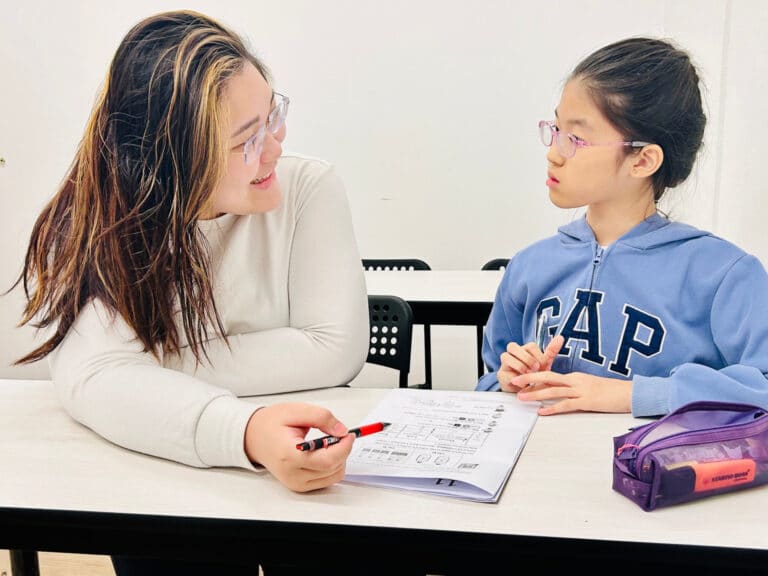
When you reach for outside support, bring three things: the paper itself, the error types you have already sorted, and the questions your child could not attempt even after review at home. Those three inputs give an educator the starting point that turns the first lesson into focused work, not a fresh test from scratch.
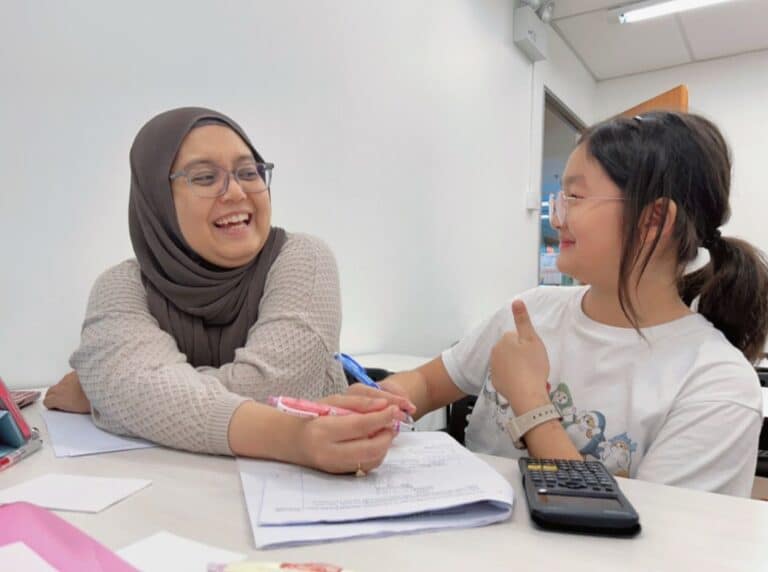
This is exactly how our primary maths tuition in Singapore works when a parent arrives with a recent test paper. We read the paper alongside the parent, sort the gaps, and design the next lessons around what the paper actually shows. The first lesson addresses the biggest gap rather than the most recent topic.
From Test Paper to Targeted Plan
Parents often ask how to get a good grade on a math test after their child has just sat a disappointing one. The honest answer is the one this article has built toward. Every mark lost is a piece of information about where to focus next. The work of reading it well, sorting the errors, naming the patterns, and planning from what is in front of you, is the work that turns a disappointing result into a recoverable one.
If you’d like an educator to read the paper with you, a trial lesson at our Jurong or Parkway Parade centres is the simplest place to start. Bring the most recent paper. Our PSLE maths tutor will sort the gaps with you and show what structured support looks like from that starting point. Our maths holiday camp for kids gives families a focused window to do exactly this kind of evidence-led work during the school break.