Primary Math Exam Preparation When Time Is Running Short
Ask any parent six weeks out from a major maths exam what their child is revising, and the answer is usually some version of “everything.” That is the problem. The last lap is not a covering exercise. It is a sequencing exercise, and the families who treat it that way recover more marks than the families who don’t.
At Concept Math, we call it the alternative Revision Paralysis. It is not the time to cover the whole primary math syllabus. It is the time to consolidate what is known, sharpen what is shaky, and build the composure that turns understanding into marks. What follows answers the three questions every parent asks: what to revise, in what order, and how.
The Biggest Mistake Parents Make in the Last Lap
Scatter Revision is the most common pattern, and the most costly. A child spends three days on geometry because it feels unfamiliar, when their actual weak area is percentage. A parent prints fifteen pages of fraction practice because the last mock paper produced a fraction error, without checking whether the error was conceptual or careless. The hours go by. The marks don’t come out.
The assessment book trap compounds the problem. More papers do not equal more readiness. A child who attempts 10 papers and reviews the answers without understanding why each wrong answer was wrong is practising mistakes, not correcting them.
The corrective principle is what we call Revision by Evidence. Every decision in the last lap should trace back to something a test paper or diagnostic exercise has revealed, not something a parent fears. If the most recent school paper shows marks lost as a percentage of the remainder, that is what gets revised. The plan is built from evidence, not anxiety.
Notes or Past Year Papers: The Answer Parents Actually Need
The question parents ask most often in the final weeks is whether to revise from notes or past-year papers. The honest answer is sequenced, not either-or.
Phase 1 is for closing the gaps and building speed. Focus on structured notes and concept reviews to identify what is shaky and fix it. Put extra time into Paper 1 practice here so the simpler computations become quick and automatic before the exam gets close. A child who jumps straight to past year papers without doing this work can mark a paper, see a score, and still not know why those marks were lost.
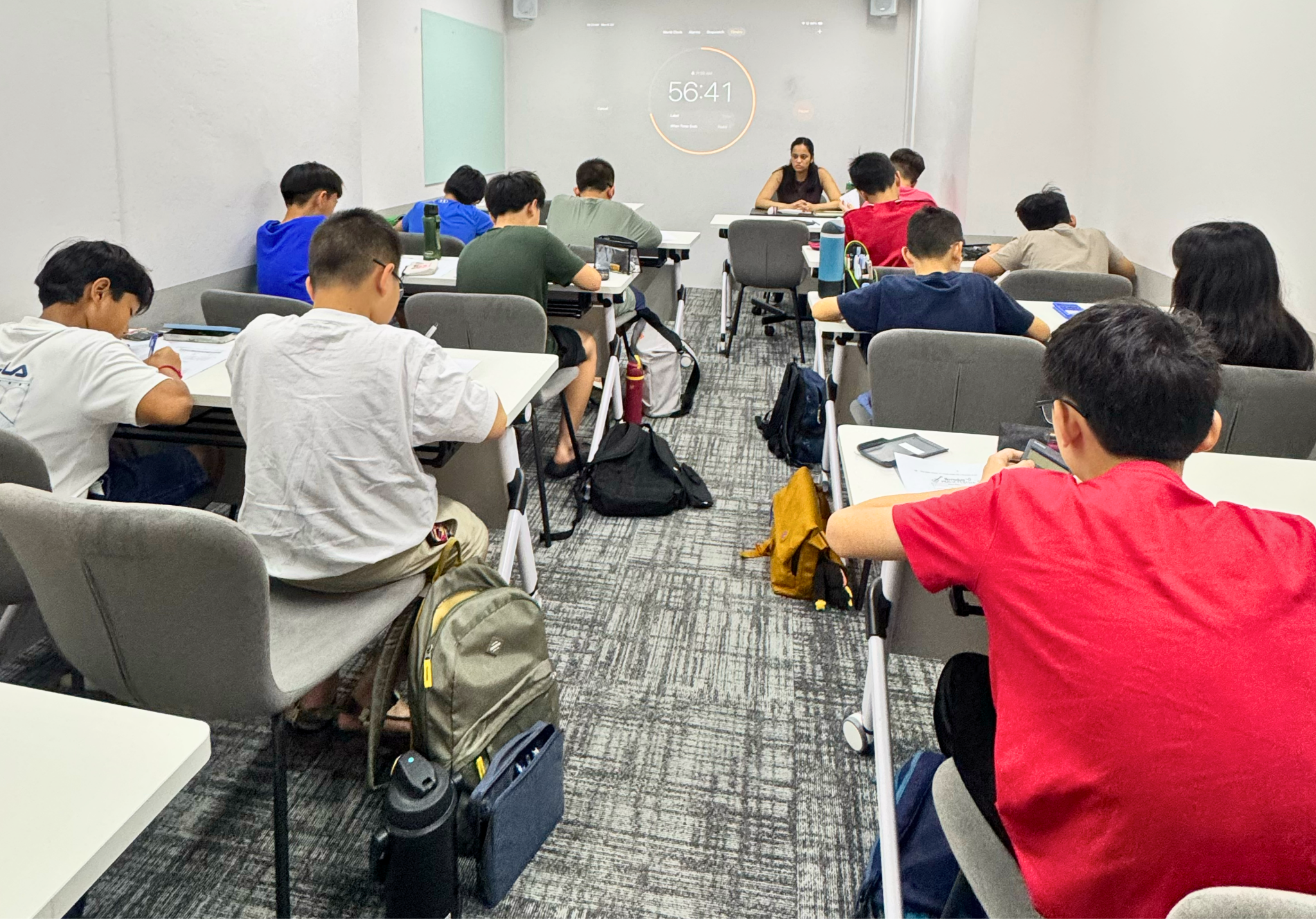
Phase 2 is for building exam readiness. Shift to timed past year papers, with Paper 2 multi-step problem sums as the main focus. Pacing, decision-making under pressure, and the discipline to check working before moving on are skills that only develop under real exam conditions.
What to Revise, and in What Order
The revision order is not arbitrary. It follows the marks.
Start with high-frequency, high-weightage topics. Fractions, Ratio, Percentage, and Area and Perimeter appear consistently across years and carry the heaviest mark loads. These come first because the cost of being shaky on any one of them is the highest.
Layer in personally weak areas next, using the child’s most recent school exam paper as the diagnostic. Look at where the actual loss of marks occurred, not which topic felt hard at the time. A child who feels weak in geometry but lost most of their marks on the percentage-of-remainder component needs a percentage-focused revision plan, regardless of which topic caused more anxiety in class.
End with targeted timed practice on the question formats that carry the heaviest marks in Paper 2. Multi-step problem sums, especially those involving two or more connected concepts, are where the marks separate the prepared from the merely practised. Our maths tuition for primary 6 deliberately builds this sequencing into the final term.
How Concept Math Structures the Final Lap
Each PSLE-prep lesson in the final term is split between two jobs. The first is conceptual consolidation, in which known gaps are addressed in a structured manner. The second is timed exam practice, where the performance instincts that translate understanding into marks under pressure get built. A child who is conceptually strong but slow on the clock loses marks they could have earned. A child who is fast but conceptually shaky makes the same mistakes faster.
Mock tests are diagnostic tools, not performance checks. What a student does with the forty minutes after a mock paper matters more than the score itself. Reviewing each wrong answer for its underlying cause, sorting errors into conceptual, careless, and time-pressure categories, and feeding that into the next week’s revision is the work that produces real movement on the next paper.
The S.M.A.R.T. approach earns its weight specifically under exam conditions. The revised PSLE maths paper includes a higher proportion of unfamiliar, application-based questions, which means a child needs a reliable opening move when a question doesn’t immediately match a practised pattern. A child with a consistent decision-making framework attempts those questions instead of skipping them, and attempted questions earn marks.
From Final Lap to Final Paper
The last lap is not about doing more. It is about doing the right things in the right order, with enough calm to execute under pressure. Every mark recoverable in the final six weeks is recoverable if the revision is structured.
If your child is heading into the final stretch without a clear plan, a trial lesson at our Jurong or Parkway Parade centres is the simplest place to map out the last lap together. Our broader approach to maths tuition for primary school students is built around evidence-led revision, and the maths holiday camp for primary students gives families a focused entry point during the school break.