How to Revise for PSLE Maths in 2026: What Actually Works in the Last Lap
Almost no one revises badly on purpose. The trouble is that the habits which feel most productive in the final months are often the ones producing least — and by the time that shows up in a score, there is no time left to change course.
THE SHORT ANSWER
- To revise for PSLE Maths in the last lap, do fewer papers and correct them properly.
- Revise topic by topic at exam standard rather than drill standard.
- Use one consistent method per concept.
- Sort every wrong answer into one of four causes.
- Return those same questions cold five to seven days later.
- One paper properly corrected moves more marks than three papers filed away.
KEY TAKEAWAYS
- Practice reveals problems. Correction fixes them. Volume of papers alone changes very little.
- Working across five sources means meeting five different methods for the same question.
- Drill questions hand a student the method; exam questions hide it. That gap is where marks go.
- In 2026, Paper 1 and Paper 2 carry 50 marks each, so the non-calculator paper is no longer a warm-up.
- Every wrong answer has one of four causes, and each needs a different fix.
ON THIS PAGE
- The four most common PSLE Maths revision mistakes
- How a P6 student should revise maths instead
- The four-box correction sort
- Why one consistent method matters most now
- Your last lap: three stages for the weeks that remain
- PSLE Maths revision: parents’ questions
With PSLE weeks away, every P6 household in Singapore is revising. Very few are revising badly on purpose. Here are the patterns we see most often in the final stretch, what goes wrong with each, and what we would do instead.
The four most common PSLE Maths revision mistakes
1. Treating volume of practice as progress
The most common pattern by far: finish a paper, mark it, note the score, file it, start the next one. Thirty papers by October feels like diligence.
We have met P6 students who completed forty papers and made the same mistake in week ten that they made in week one. We have met students who did twelve and improved steadily. The difference was never the number of papers.
Practice does not fix anything by itself. Practice reveals. What fixes things is what happens after the marking.
Doing many exam papers simply measures the problem many times over. It does not solve it at the root.

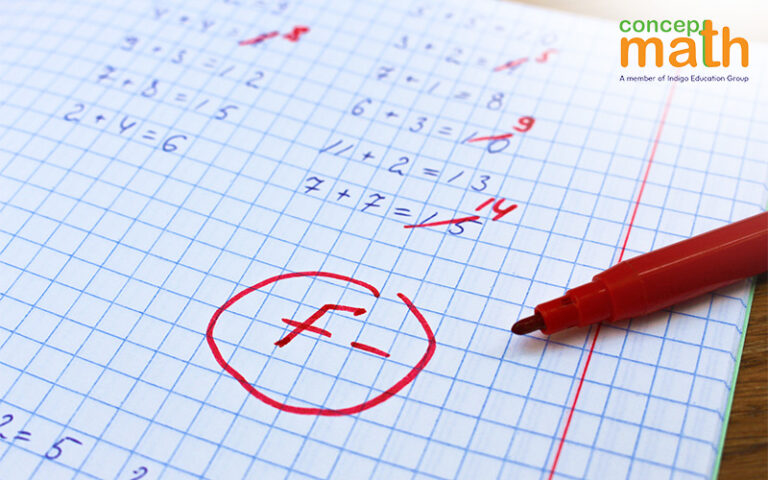
Thirty papers, marked and filed. The score was recorded each time; the mistake was never traced.
2. Collecting sources — and collecting methods with them
This one is almost invisible, and it may be the most damaging. In the final months, parents gather new practice material: a new assessment book, another school’s prelim papers, worked solutions found online, a relative’s hand-me-down notes.
Every source presents its answers differently. One draws a model. Another works in units. A third goes straight to a line of algebra. A fourth solves in three steps where the student’s teacher uses five. Every one of them is correct.
But a student working across five sources meets five different ways of laying out the same question, and quietly concludes that the method is whatever the answer key happened to do. That is the opposite of what a student needs this close to the exam. In the exam hall, under pressure, a student holding one reliable method starts writing. A student holding five half-remembered ones hesitates — and hesitation is where the confusion starts and the time goes.


The same question, two correct solutions, laid out differently. A student meeting both in the same week has to decide which one is theirs.
3. Drilling by topic, at drill level
Topic revision is sensible. The problem is the level it usually happens at. It is easiest to show with two questions that test the same thing.
The drill
Find 24% of 450.
Most P6 students handle this in seconds. 108. Move on.
The exam question
Mr Lim had some magazines. He sold 288 of them on Saturday and Sunday. On Monday, he sold one-third of the remainder. He was left with 24% of the magazines he had at first. How many magazines did he have at first?
Same topic. Same student. Very different outcome.
Nothing in the second question says “percentage.” Before a student can use one at all, they have to see that the 288 and the 24% are anchored to different quantities — one to the original stock, one to what survived two rounds of selling. They have to hold a remainder, take a fraction of it, and recognise that what is left is a percentage of a number they do not yet know.
The drill question is the last line of the exam question. Once a student works out that the answer is 450, confirming that 24% of 450 is 108 takes seconds — the very skill they already had. The marks were never in the percentage. They were in everything that had to happen before it.
The same pattern runs through every topic:
Drill level
A tank has a base measuring 20 cm by 15 cm and is filled with water to a height of 12 cm. Find the volume of water.
The question tells the student exactly what to do.
Exam level
Two tanks are filled with water to the same height. Tank A has a base measuring 20 cm by 15 cm, and Tank B has a base measuring 15 cm by 10 cm. Tank A holds 1800 ml more water than Tank B. What is the height of the water in each tank?
The student must see that the shared height is the unknown.
Both use volume equals base area times height. Only one is hard. Drills build fluency, and fluency is worth having — but drills also produce false confidence, because they test whether a student can execute a method they have already been handed.
4. Treating Paper 1 as the warm-up
Most revision routines drift towards Paper 2 problem sums, because that is where the difficulty feels concentrated. Under the 2026 format that balance needs revisiting.
PSLE Mathematics 2026: the two papers at a glance
| Paper 1 (no calculator) | Paper 2 (calculator) | |
|---|---|---|
| Marks | 50 (previously 45) | 50 (previously 55) |
| Duration | 1 hour 10 minutes | 1 hour 20 minutes |
| Short-answer questions | All worth 2 marks — the 1-mark questions in Booklet B have been removed | Five short-answer questions, 2 marks each |
| Units | Printed on the answer line, so units are no longer a source of lost marks | |
Source: Singapore Examinations and Assessment Board, 2026 PSLE Mathematics examination format.
Two things follow. First, Paper 1 now carries half the total, so accuracy and speed of recall under mild time pressure are worth exactly as much as problem sums — and both are trainable. Second, with every short-answer question worth 2 marks, a student who solves mentally and writes only the final answer has nothing for a marker to credit if they slip. Showing working is no longer a neatness habit. It is where the part marks live.
How should a P6 student revise maths instead?
Four disciplines, run in parallel. They are unglamorous and they work.
1. Revise topic by topic, at exam standard
Revise by topic, but at exam standard rather than drill standard. Students should be working on questions written at the difficulty they will actually meet at PSLE, structured so they start recognising the patterns behind question types and know how to begin.
2. Test the thinking, not the calculation
Try this tonight
Take ten mixed questions. Do not ask your child to solve them. Ask only: what is this question testing, and how would you start?
Ten questions take five minutes this way.
It checks the thinking rather than the arithmetic — not the calculation, but the decisions made before it. If a student can name the concept a question is testing and describe the first move, the rest usually follows. If they cannot, more solving practice will not help, because the breakdown happens before the solving begins.
3. Full papers, under one consistent method
Full papers still matter, for stamina, pacing and the experience of switching between topics without warning. But run them under one method, consistently.
The point is not which method, but that there is only one. If a student’s lessons already give them a single consistent approach they can apply across topics, deepen that one and ignore the variations an answer key throws up — ask instead whether it is the same thinking, written differently. Nine times out of ten it is.
But if a student is meeting a different method in every source, or a different approach for each question type, that is not something to work around. It is the problem itself, and it is worth fixing now rather than after the exam.
4. Hyperfocus on mistakes
After marking, correct properly — sort each wrong answer using the four boxes below. Then give those questions back five to seven days later, cold, with no hint about the topic. Correcting a question while the method is fresh proves very little. Retrieving it a week later proves it stuck.
For most P6 students now, one full paper plus one proper correction session will do more than three papers and no correction.
The four-box correction sort
After marking, put every wrong answer into one of four boxes. Four boxes, four completely different problems — and you do not need to be confident at maths to sort them.
Every wrong answer has one of four causes
| The cause | How you will recognise it | What it needs |
|---|---|---|
| 1. Did not know the concept | The working stops early, or goes nowhere near the right idea | Re-teaching |
| 2. Knew it, did not recognise it | Your child can solve it the moment you name the topic | The identification exercise above |
| 3. Recognised it, slipped in the working | Right approach, wrong arithmetic partway through | Slower, fuller working |
| 4. Had it, then lost it | Misread the question, answered the wrong part, never checked | A checking habit, and nothing else |
Why does one consistent method matter most at this stage?
In the final months, flexibility in applying different methods to a similar question becomes a liability — not because any one method is wrong, but because of what an exam actually demands.
What is the PSLE Maths exam really testing?
An exam does not test whether a student can solve a question. It tests whether they can solve it in the time available, under pressure, without the option of a second attempt. What matters there is not how many approaches they know but how quickly one arrives. If a student has learnt four different ways to approach a similar question, they have to spend time deciding which one to use — and in the exam they do not have it.
Why do students freeze and skip questions?
A student stares at an unfamiliar question, not because they lack the concept, but because nothing tells them which of their several half-formed approaches to reach for. A consistent method removes that decision. Whatever the question looks like, the first move is known — and once a student is writing, the question usually opens up.
Why can’t my child check their own work?
Consistency also makes checking possible. You can only check working that follows a predictable shape. If every solution looks different, there is nothing to check it against, and checking becomes reading the answer again and hoping. That single habit accounts for a surprising share of marks lost by students who understood the question perfectly well.
It is also what makes non-routine questions manageable. A question a student has never seen before is only frightening if it demands something new. Approached with the same thinking they use for everything else, it becomes a variation rather than a fresh problem.
Your last lap: three stages for the weeks that remain
Nothing here requires starting over. By now most students have done enough questions; what is usually missing is the layer underneath. That layer can still be built in the weeks that remain, because it is not new content. It is the same content, approached the same way, often enough that the approach becomes automatic.
STAGE 1
One concept, one method
Settle on a single way of approaching each concept, and stop switching between them.
STAGE 2
The same method, across every topic
Run it through topic-by-topic revision at exam standard, so percentage, ratio, geometry and volume are not four separate skill sets but one way of thinking applied four times. This is where question identification becomes reliable — the student stops asking what kind of question is this and starts asking what is this testing, and what is my first move.
STAGE 3
Then under the clock
Full papers at exam pace, where the method has to hold up while a student is tired, unsure and watching the time. A method that only works at the kitchen table on a Sunday afternoon has not been tested.