September Holiday PSLE Revision: Consolidate, Don’t Cram
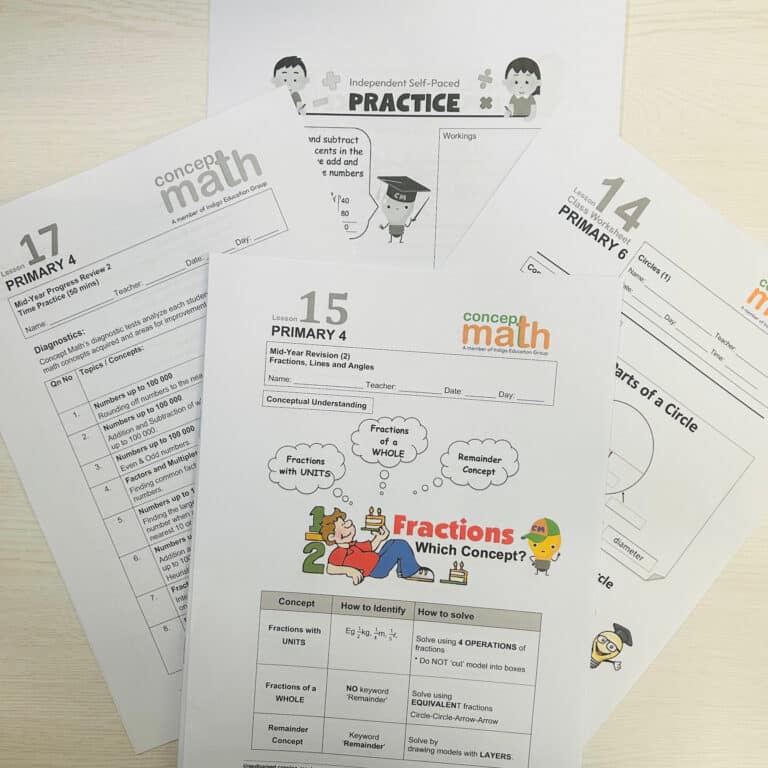
It is the first morning of the September holidays. A fresh stack of past-year papers sits on the table, three assessment books beside them, and a revision timetable running from 8am to 9pm. At Concept Math, we see this pattern every year, and what happens three weeks later when it’s time for the actual papers.
The window is nine days, with PSLE written examinations from 24 to 30 September. This is not the time to learn, but to sharpen what is already there. The students who perform best are not the ones who did the most papers. They are the ones who understood the difference between practice that consolidates and practice that adds noise.
Consolidation means identifying the concepts that still slip, addressing them methodically, then practising under exam-like conditions. That is why a focused 3-day approach does more for an AL score than a 9-day paper marathon.
Why Cramming Backfires in the Final Window
High-volume, last-minute PSLE math review practice generates completed papers, not corrected thinking. A student who finishes eight papers in nine days but hasn’t revisited the concept behind each wrong answer has only confirmed their gaps rather than closed them.
Three specific patterns explain why:
- Mental fatigue sets in before exam day: Paper 2 demands sustained, high-level thinking across 90 minutes. A child who has been drilling from morning to evening for nine consecutive days arrives at the actual exam with a depleted cognitive reserve.
- Repeated exposure to wrong methods reinforces them: Without structured correction, a student who consistently misidentifies the reference whole in a Percentage problem will keep doing so on the tenth paper. Volume does not fix a conceptual error. Targeted teaching does.
- The anxiety loop compounds: A student who completes five papers and still cannot solve a particular question type will feel worse about the exam with each attempt. Confidence is a performance variable at PSLE, and the September holiday is a critical window to build it.
The job is not to cover more ground. It is to make the ground already covered feel certain.
What Focused Consolidation Actually Looks Like
Consolidation means taking the topics a student can almost do and ensuring they can fully do them, under time pressure, without prompting. It is targeted, sequenced, and capped at a sustainable daily intensity so the child arrives at exam day with energy intact.
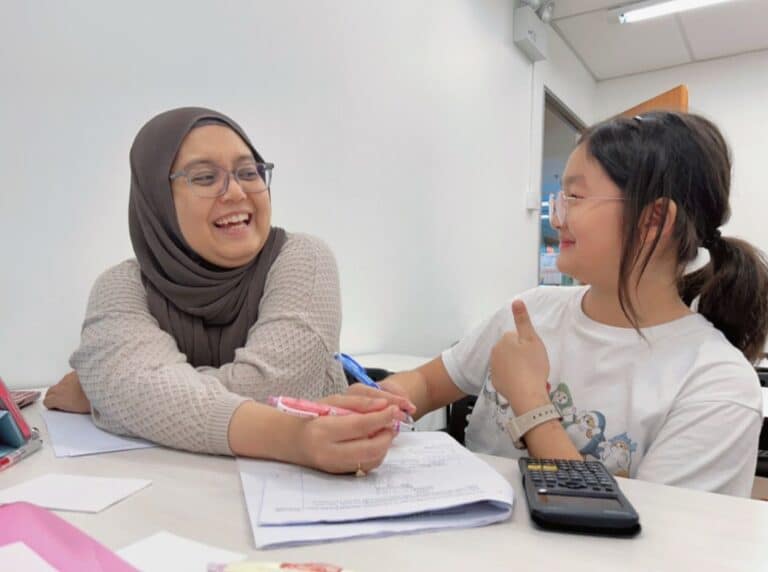
A consolidation day looks like this: identify one or two topic areas from recent prelim results, revisit the underlying concept with a teacher or guided resource, attempt 5 to 8 targeted questions on that concept, correct every mistake before moving on, then close the books by early afternoon.
By September, most P6 students have their school preliminary examination results. These are the most accurate diagnostic tools available. A student who knows from their prelim which topics cost them the most marks can direct every consolidation session at a named, specific gap rather than guessing at what to review.
Stopping time matters as much as content. Revision that runs into the evening displaces sleep, and sleep is a more powerful performance input than an extra hour of problem sums. A child who sleeps 8 to 9 hours each night in September will outperform a more knowledgeable but exhausted child on exam day.
High-Yield Revision Areas for Difficult PSLE Maths Questions
Not every topic deserves equal time in a nine-day window. These four areas consistently produce the hardest PSLE Maths questions and reward focused review:
- Fractions, Ratio, and Percentages: Review conversion between fractions, decimals, and percentages. Focus on Remainder and Total word problems, which are where most marks are lost.
- Geometry: Commit the formulas for the area and circumference of a circle (πr² and 2πr) to memory, and practise finding unknown angles in parallelograms, rhombuses, and trapeziums.
- Heuristics: Instead of full exam papers, practise three to five challenging word problems daily. Focus on Working Backwards, Units and Parts, and Assumption (Guess and Check).
- Rate: Speed has been removed from the current syllabus, so direct that time towards Average and Rate problems instead.
The Last Dash 3-Day Spine: What to Cover and Why
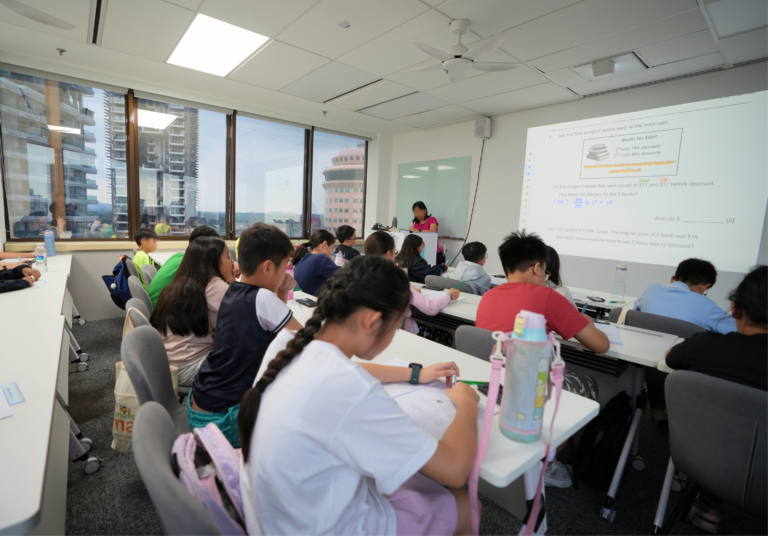
Concept Math’s Last Dash PSLE Maths Intensive is built around a structured 3-day topic spine covering the highest-weightage and most frequently tested P6 Maths content. Each day addresses a cluster of related concepts so students build momentum within a theme rather than context-switching across unrelated topics.
Day 1: Geometry and Circles
Angles in triangles and quadrilaterals, properties of special quadrilaterals, and the area and circumference of circles, including composite figures with circular regions. These questions appear consistently in Paper 2 and often carry four to five marks each. The consolidation focus is setting up the correct equation before attempting to solve, a step many students rush past under exam pressure.
Day 2: Measurement, Volume and Average
Area and perimeter of composite figures, volume of cubes and cuboids, and Average as a concept rather than a formula. Average is a P6 topic under the revised MOE syllabus, and PSLE questions often require working backwards from a known average or finding the effect of a value change. The consolidation focus is identifying what the question is really asking before reaching for a method.
Day 3: Percentage, Ratio and Algebra
Percentage increase and decrease, percentage of a remainder, ratio comparisons and the part-whole relationship, and simple linear equations in Algebra. These three topics are closely related in the revised P6 syllabus and frequently appear together in a single multi-step Paper 2 question. The consolidation focus is recognising which concept governs each stage of the problem, not treating the question as a single operation.
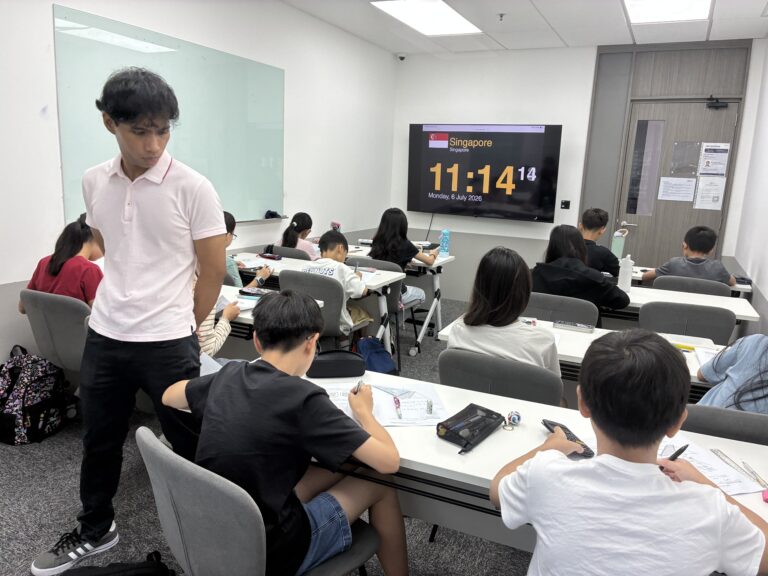
The 3-day spine does not replace rest. Each session is focused and time-bounded. Afternoons are left clear, and the days leading up to exam week are reserved for light review. Sorting revision by question type rather than topic is the same principle at work here, applied to the final stretch.
What Parents Can Do in the Final Days
By September, a parent’s most valuable contribution is not checking answers. It is protecting conditions.
- Remove the countdown from the conversation: Statements like “only 18 days left” raise cortisol without improving performance. The exam date is known. Repeating it adds pressure without adding preparation.
- Protect the evenings: A child doing focused revision in the morning and early afternoon should have genuinely light evenings. Family dinner, a walk, a favourite show. Rest is not a reward given after sufficient revision. It is a condition of effective revision.
- Ask what they understood better today, not how many papers they did: The question changes what the child notices during revision and signals that quality is the metric.
Exam Strategy for PSLE Maths Questions
A few habits make a measurable difference once the exam papers are in front of your child.
- Paper 1 (50 marks): Time yourself to roughly one minute per mark. Do not get stuck on a tough MCQ or short-answer question. Move on and come back later.
- Paper 2 (50 marks): The majority of marks come from structured heuristics questions. Show all working steps. Even if the final answer is wrong, working out scores method marks.
- Error analysis: Spend remaining time reviewing past homework and mock tests, specifically the mistakes already made, to ensure they are not repeated.
Two habits carry the most weight in the days immediately before the exam:
- Identify weak spots first: The most useful revision tool available in September is not a new assessment book. It is the school preliminary examination result. Before opening a single paper, sit down with the prelim script and identify which specific topics or question types consistently lost marks. These are the only areas that need active work. Revision without a named gap is guesswork dressed up as preparation.
- Run time trials, not full papers: Rather than attempting complete timed papers back to back, isolate the question types that caused difficulty in the prelim and run short, focused time trials on those clusters. Set a timer, attempt four to six questions from one topic area, then review every answer before moving on.
For a fuller view of what the final weeks of PSLE Maths revision should look like beyond September, here’s our guide to what actually works in the last lap, which covers the broader picture.
Consolidation Is the Smarter Preparation
The September holiday is not the time to discover what your child does not know. It is the time to confirm what they do. A student who enters the exam hall with three well-understood concepts and genuine confidence in their method will outperform one who has seen every question type but trusts none of their answers. Consolidation is not a softer form of preparation. It is a smarter one.
The Concept Math Last Dash PSLE Maths Intensive is a focused 3-day programme designed to consolidate the highest-weightage P6 topics before the written examinations begin. Places are limited and September fills early. Visit our PSLE maths tuition centres in Jurong or Parkway Parade to secure your child’s spot, or explore primary school maths tuition across all levels.