The Parents’ Role in Primary School Math: What Actually Helps
The homework table tells a familiar story. A parent leans in beside the child, ready to catch every wrong answer the moment it surfaces. The intentions are good, but the scores remain unchanged, week after week.
This is likely known as Proximity Without Partnership. The parent is physically present during learning but is not actually supporting it. The correction reflex, however well-meant, removes the one cognitive process that primary school math is supposed to build: the struggle of working through a hard question without rescue.
A parent’s role in a child’s math journey is not to explain the method better than the teacher, but to create the conditions in which the method can stick. The good news is that those conditions have very little to do with being able to solve P5 problem sums yourself, and a great deal to do with how a parent can help.
The Homework Table Trap
When a parent sees a wrong answer and immediately shows the child the right one, two things happen at once. The worksheet ends up correct, and the misunderstanding ends up hidden. The teacher sees clean pages, the child files away the experience of being rescued, and the conceptual gap that surfaced for a moment goes back underground. It feels supportive in the moment, but it can be costly in aggregate.
There is a second cost, less visible than the first. A child who knows a parent will intervene at the first sign of trouble slowly stops trusting their own thinking. They develop the habit of waiting, eyes on the parent, for the next prompt. This is how households produce a child who can solve a problem beside a parent at the kitchen table, only to freeze alone in an exam hall. The skill that mattered, sustained independent thought, was never given room to develop.
Here are two questions to replace the correction reflex without abandoning the child to the page:
- “What do you know so far?”
- “What is the question asking you to find?”
Both move a child forward without removing their ownership of the solution. Used consistently, they teach a child to talk themselves into the next step, which is the same skill they will need on a paper with no one beside them.
What Engaged Parents Actually Do
Engagement at home does three things well, and none of them requires knowing how to teach primary school math.
1. Ask about process, not just results
After a correct answer, “How did you figure that part out?” is more useful than a tick or a piece of praise. Articulating their own thinking is one of the skills the revised PSLE math syllabus rewards, and a child who has had to explain their reasoning at home becomes far more confident at explaining it on paper.
2. Protect the environment, not the grade
Consistent sleep, a quiet study space, and a calm response to a poor exam result create the psychological safety that lets a child take intellectual risks. A child who fears the conversation that follows a bad result starts playing it safe in their work, sticking to methods that feel comfortable rather than attempting the ones that match the question. Over the year, that caution costs more marks than the difficult questions ever would.
3. Stay informed without interfering with the method
A parent who knows what their child is currently working on at a primary maths tuition centre, without trying to re-teach it differently at home, reinforces the structured approach rather than competing with it. The child gets one consistent method from one consistent source, which is exactly what builds fluency.
How to Stay Informed Without Creating Pressure
The most useful conversations about primary school math at home are curious rather than evaluative. “What was the hardest thing you did today?” opens a child up. “Did you get everything right?” closes them down. A child who feels safe talking about the hard parts of math is still learning. A child who only wants to report correct answers has already begun to hide the struggle that learning depends on.
The Concept Math eClassroom does the same job. Parents can see what was covered in each lesson, and students can revisit video solutions when a concept hasn’t fully landed. The most useful thing a parent can do is monitor how the tool is used. Copying down a solution feels productive in the moment, but does not build retention. Watching the explanation once, closing it, and attempting the question independently does.
Anxiety about a child’s results is normal. Anxiety expressed in front of the child, however, becomes the child’s anxiety about math. A parent who can calmly sit with a disappointing paper for the two minutes it takes to register the result gives the child permission to do the same. The emotional regulation in the room is part of the learning environment, whether or not anyone names it.
How Concept Math Supports This Partnership
Concept Math was founded to make this kind of parent engagement possible without requiring parents to be in the room with the methodology.
1. The small-group classroom protects productive struggle
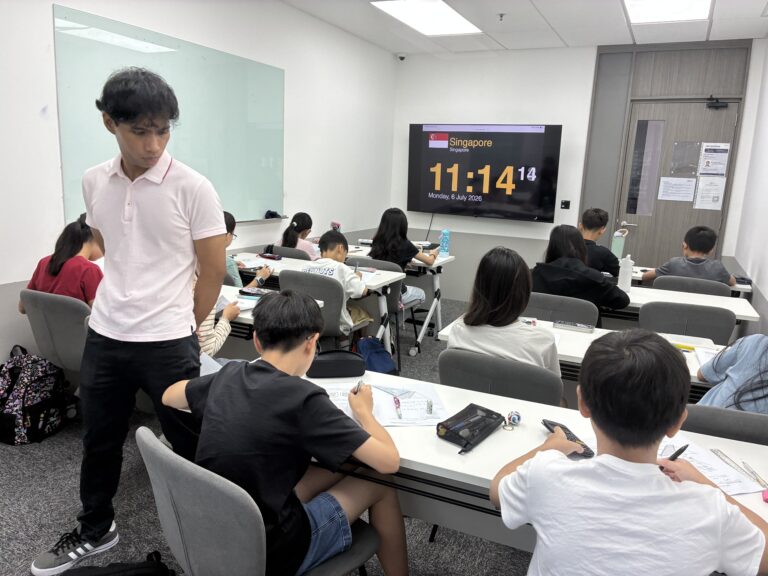
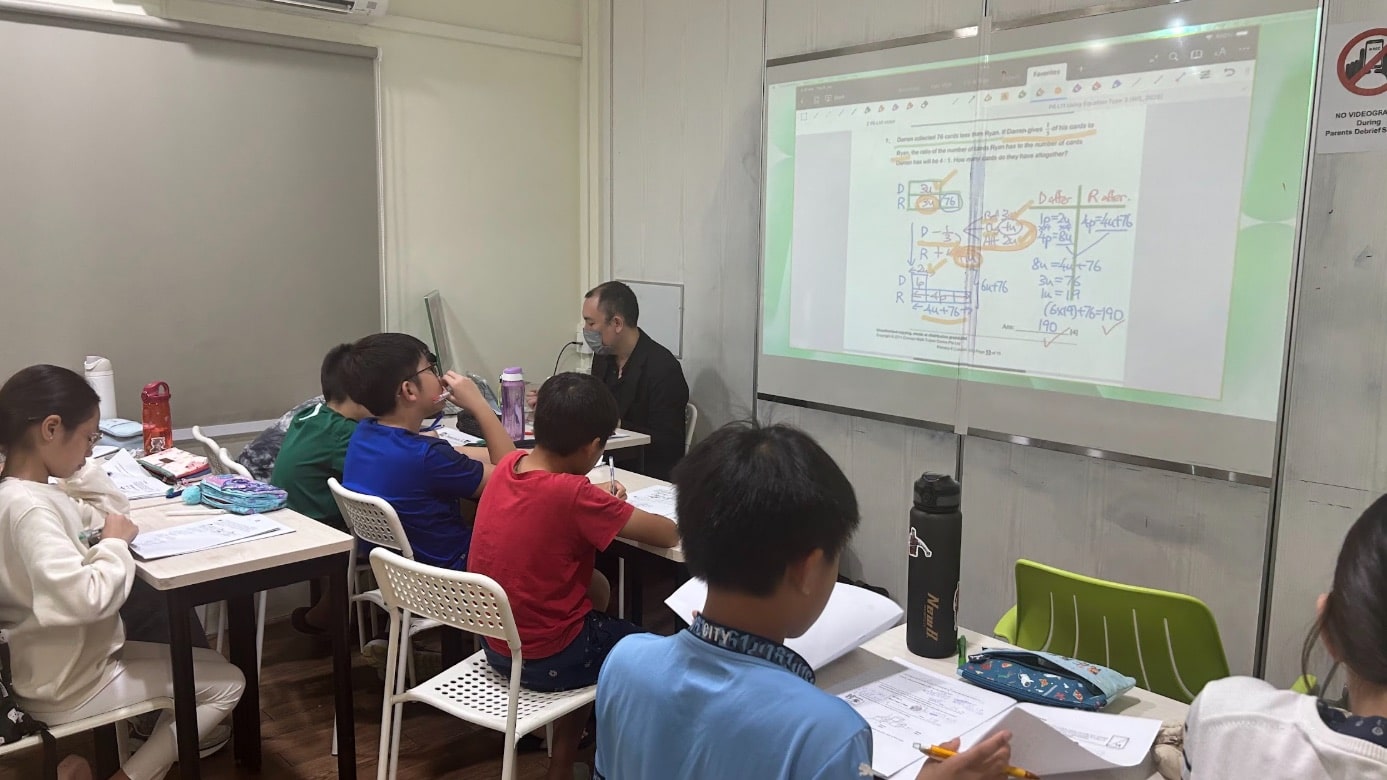
In a class of six to eight students, students are given the time to wrestle with a problem before a teacher steps in. The independent thinking that the homework table accidentally short-circuits is exactly what the classroom is designed to develop.
2. The communication infrastructure keeps parents informed
Parents have visibility of what is covered during each lesson through the eClassrooml, a five- to ten-minute debrief after every P1 to P4 class, and direct access to educators when something needs to be flagged. Parents are always informed without needing to be in the room.
3. Parent seminars equip the home side of the partnership
They give parents the framework to support their child’s mindset and study habits, separately from the technical content of the syllabus. The split is deliberate. The teaching belongs in the classroom. The mindset, the routines, and the steady emotional presence belong at home.
The Most Powerful Thing You Can Do
The most powerful thing a parent can do is not sit beside their child for every moment. It is to create the belief, through consistent calm, consistent curiosity, and consistent trust in the process, that difficulty in primary math is not a sign of failure. It is the beginning of understanding.
If you’d like to see what this kind of partnership looks like in practice, a trial lesson at our Jurong or Parkway Parade centres in Singapore is the simplest place to start, and our parent seminars are designed to provide you with the most effective support your child can have at home. The same structure applies to PSLE maths tuition, and our maths holiday programme gives families a focused entry point during school breaks.